
My Cart
0
You have no items in your shopping cart.
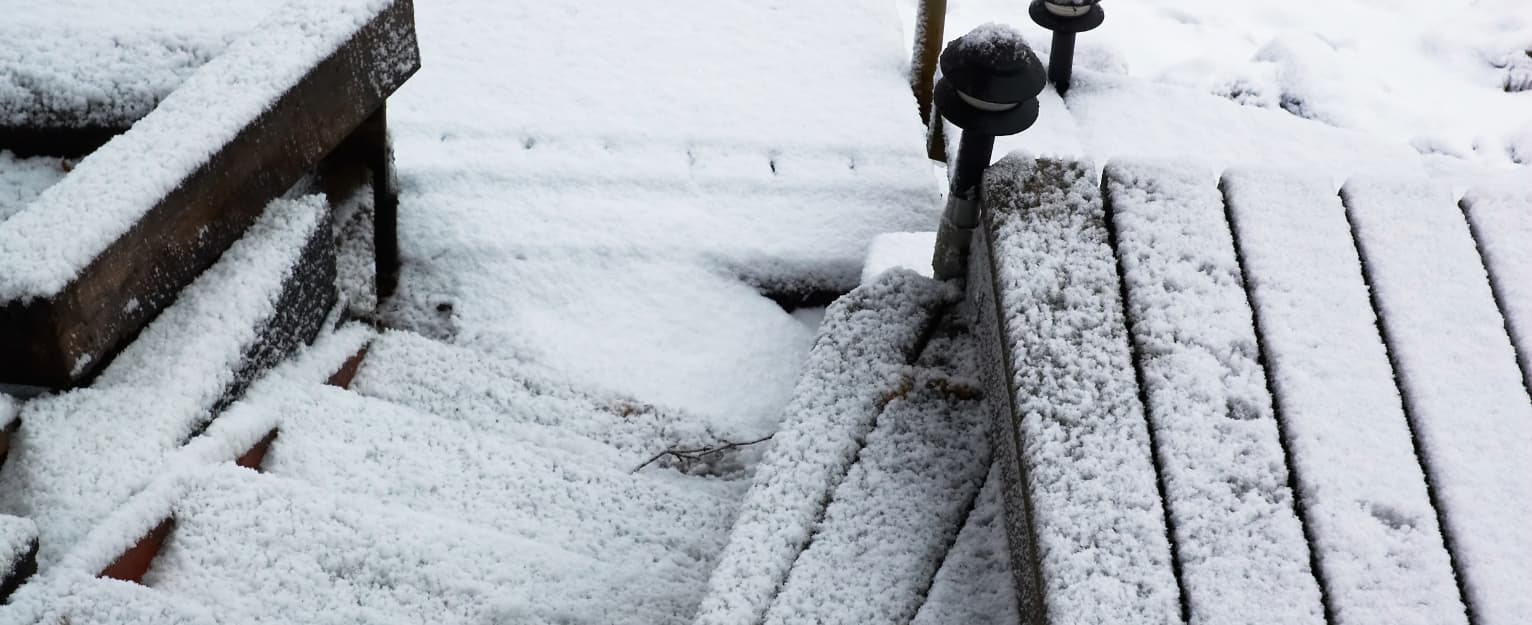
We’re now well into winter, which means you’re probably not spending so much time relaxing on your decking as you are spending time making sure it remains in good condition. One of the major winter maintenance jobs for timber decking or composite decking over the chillier months is to ensure that it remains safe, as chances are you or your family may still find yourselves walking over it every now and again. Decking that isn’t looked after can end up getting slippery very quickly – so here’s how to ensure that doesn’t happen!
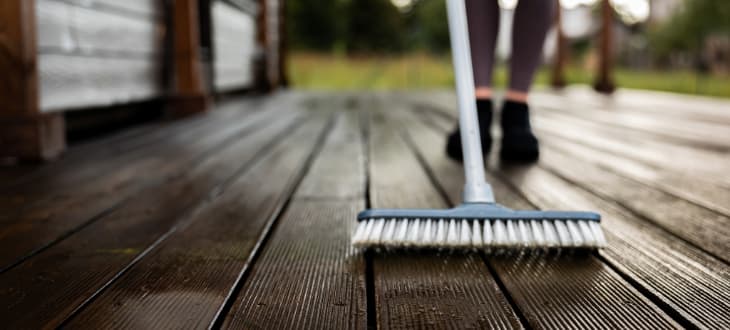
This doesn’t have to be a particularly complex job in itself – all you have to do is sweep it occasionally. Crucially, you’ll want to keep it free of standing water for example, and you’ll definitely want to keep it free of any fallen leaves, twigs or fungus. Not only can they make your decking look untidy, but wet leaves in particular can be a major slipping hazard. Thankfully, they’re not too tricky to deal with!
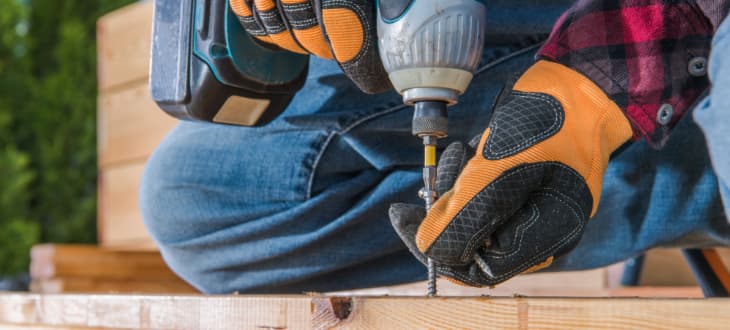
Winter weather brings increased moisture and frosty conditions that can take a toll on decking, especially if it’s timber. So, it’s important to regularly inspect your decking boards for any signs of warping, cracks, or splitting, which are especially common after heavy bouts of rain or frost. For composite decking, look for minor hairline cracks or bending that might affect the board’s integrity. If you spot any issues, don’t ignore them – small repairs now, like replacing individual decking boards or using wood filler on cracks, will save you from larger, more expensive repairs later.

Clearing leaves and debris keeps your deck clean and lessens the chance of winter rot, but using the wrong tools to get the job done can actually do more harm than good. Metal rakes, for example, can scratch or gouge the surface of your decking, especially if it’s composite. Even timber decking is susceptible to scratches from sharp metal tools, which makes them more vulnerable to moisture penetration, weakening and rot. Instead, use a soft-bristle garden brush to sweep away any leaves, dirt, or other debris. If you spend five minutes brushing piling leaves off of your decking as and when you need to, the job will be a quick and easy one!
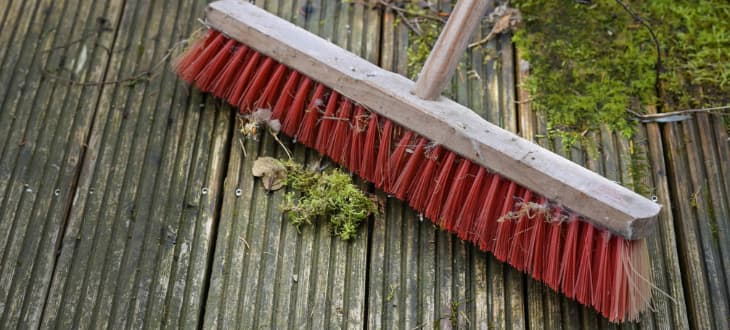
These are two elements you’ll want to keep a particular eye out for, especially since they’re both notorious slipping hazards. One good way to spot them is by looking out for green spots or streaks in your decking that aren’t present elsewhere. Pick your cleaner carefully though, as you’ll need to make sure they’re suited to the surface you’re using them on. You won’t want to solve one problem (removing moss) by creating another in the form of marks on your decking.
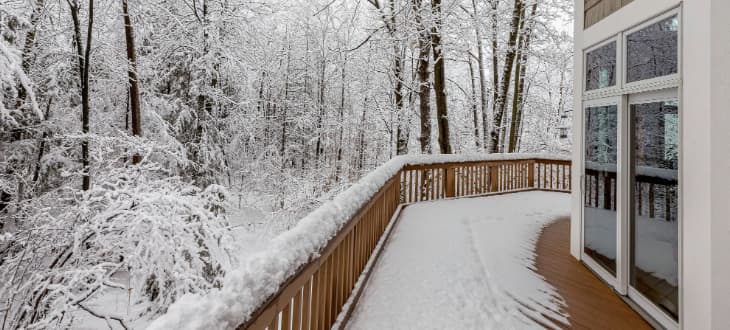
One of the reasons it’s so important to remove standing water, as we mentioned above, is that it has a tendency to harden and form into ice, which is incredibly dangerous. The first instinct might be to crack it with a shovel, but that (or any metal tools) runs a serious risk of causing damage to your decking. Even composite doesn’t stand up well to direct impacts with a shovel. You’ll need to be similarly cautious of using salt. Certain types of grit may be less risky to use, provided they’re lightly brushed off after the ice has melted. In most cases, it’s best to use warm water to clear off the ice, and then sweep away any standing puddles afterwards.
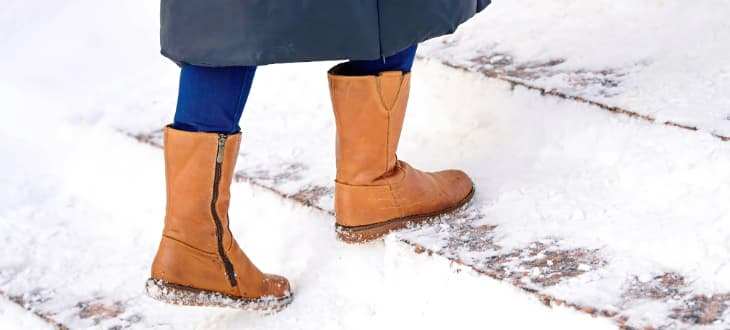
The railings and steps of your deck are often exposed to more wear and tear than other areas, especially in winter. Railings can become loose over time, and steps are prone to slipping. Take a moment to inspect these parts of your deck for stability every now and then – look for any loose screws, wobbly handrails, or damaged boards that might need attention. Tightening screws, re-fastening rails, or replacing damaged steps can make a huge difference in ensuring safety for you, your family and pets during colder months. Even if your deck isn’t in regular use, a secure railing and stable steps will make the area safer if you need to walk across it to get to other parts of the garden.

While your decking can manage perfectly well throughout the winter as long as you stay on top of all the related maintenance tasks, you can save yourself some time and effort with non-slip decking oil, which contains compressed particles to create a rougher non-slip surface. It generally won’t crack or peel, and it can be easy to replenish where necessary. However it is a bit of an investment, so you may need to make a judgement call as to which you’d prefer – saving the money and simply making sure you keep on top of maintenance, or spending a bit extra on specialist decking oil, and getting a bit of time back. The choice is up to you!
And of course, if any of your boards do become damaged for whatever reason, you can always get replacements for the very best prices right here at Savoy Timber. From composite decking kits to timber boards, fixings and beyond, we have everything you need to create a stunning deck you can enjoy for years. You can shop our ranges online or visit one of our stores in Blackpool, Wigan, or Preston. If you have any questions give our friendly team a call on 0345 0268 799, we’re always happy to help!

