
My Cart
0
You have no items in your shopping cart.
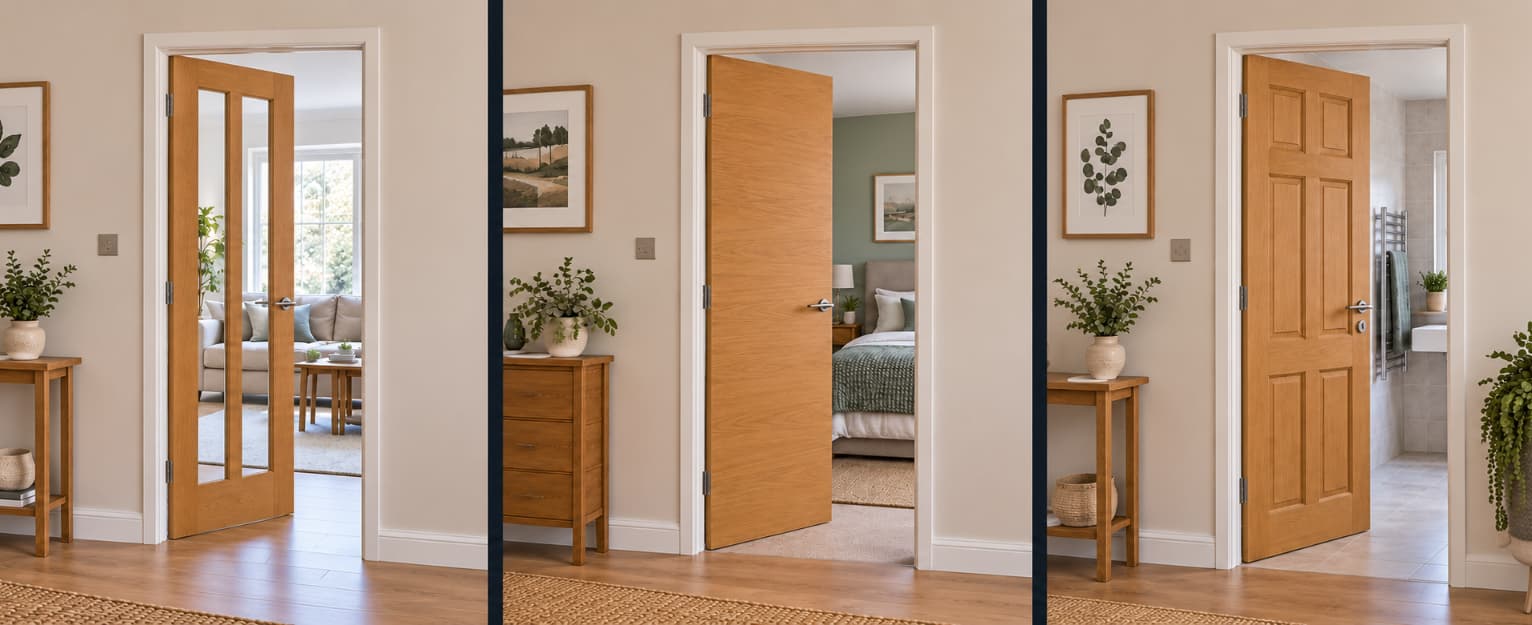
At Savoy Timber, we’ve been helping people across the UK transform their spaces for more than 70 years now. We know that when it comes to upgrading your home, one of the most effective changes you can make is to replace your internal doors. Although it might seem small, the style of your door can completely refresh the look and feel of your space, and whether you’re interested in going modern with an industrial door or classic with a Victorian-style model, we’ve got options for you.
As one of the UK’s leading suppliers, there’s one question we get asked over and over again: ‘do different rooms need different doors?’ We’re here to break it down, explore the benefits of mixing door styles and help you find the best internal doors for your home.
So, do all the internal doors in your home need to match? Not necessarily. While matching doors can give a home a neat, coordinated look, mixing door styles can work just as well – and sometimes makes more sense. From the feel you want to create to the way each room is used, there are plenty of reasons to mix things up.
Every room has its own character, so why shouldn’t your doors reflect that? A warm, traditional living room might suit the natural look of an oak door, while a simple Shaker design could sit comfortably alongside the clean lines of a more contemporary kitchen or home office. In a bedroom, meanwhile, you might prefer something understated that blends quietly with the rest of your décor. Sometimes, it’s the smaller details that help a room feel like it belongs to you.
Looks aren’t the only thing to consider when choosing an internal door – you also need to think about what you want the door to do. A bedroom, for example, will usually benefit from a solid door that gives you privacy, while a home office could suit a glazed design if you want the room to feel connected to the rest of the house. With that in mind, it’s also worth considering how much space you have available. A door that works perfectly well in a roomy bedroom might not be the best fit for a narrow hallway or compact office, where a bifold design could make better use of the space. This is where mixing door styles can really work in your favour. Instead of using the same design throughout the house, you can choose different options that suit the way each room is used.
If you’re mixing door styles, the aim isn’t to make every doorway look identical – it’s to make the differences feel like they were chosen for a reason. You might want something more decorative in a period hallway, a glazed option to brighten a darker room, or a simpler design where you want the door to blend into the background. The trick is to let each door do what works for its space, while keeping enough of a common thread between them that the house still feels like one home.
With all that said, mixing door styles isn’t necessarily going to be right for every home. For some people, keeping the doors the same simply makes more sense, especially if you like a clean, calm look or have several doors that can be seen together.
Take a hallway, for example. If you can see the doors to several bedrooms, a bathroom and a living room from the same space, using a different design on every doorway can make the hallway feel quite busy. Keeping the main door style consistent helps everything sit comfortably together, allowing other features like your flooring, wall colour, lighting and furniture to have more of the attention.
Matching your doors can also make life a little easier when you’re renovating the whole house. Rather than choosing a different style for every room, you can settle on one you love and carry it throughout the property. It’s a simple way to create a sense of continuity, and it can save you from having to make dozens of separate design decisions along the way.
If you do decide to mix things up from room to room, the next step is working out what suits each space. Think about how each room is used, what you want the door to do and how it will sit alongside the rest of your interior. Privacy, natural light, available space and the overall style of your home can all help point you towards the right choice.
Those are the key points covered! Whether you decide to mix or match, you’ll find what you’re looking for with us. At Savoy Timber, we’re proud to offer all the best internal doors, including options from leading brands like LPD and Deanta. Maybe you’ve got your heart set on a timeless Shaker internal door; perhaps you’re considering something sleek and modern, like a laminated door. Whatever you’ve got planned, we’re here to help, combining premium products and unbeatable prices every time.
Still struggling to choose? Visit one of our stores in Preston, Blackpool and Wigan, or give us a quick call on 0345 0268 799 and discuss your home upgrade with a member of our expert team today.

