
My Cart
0
You have no items in your shopping cart.
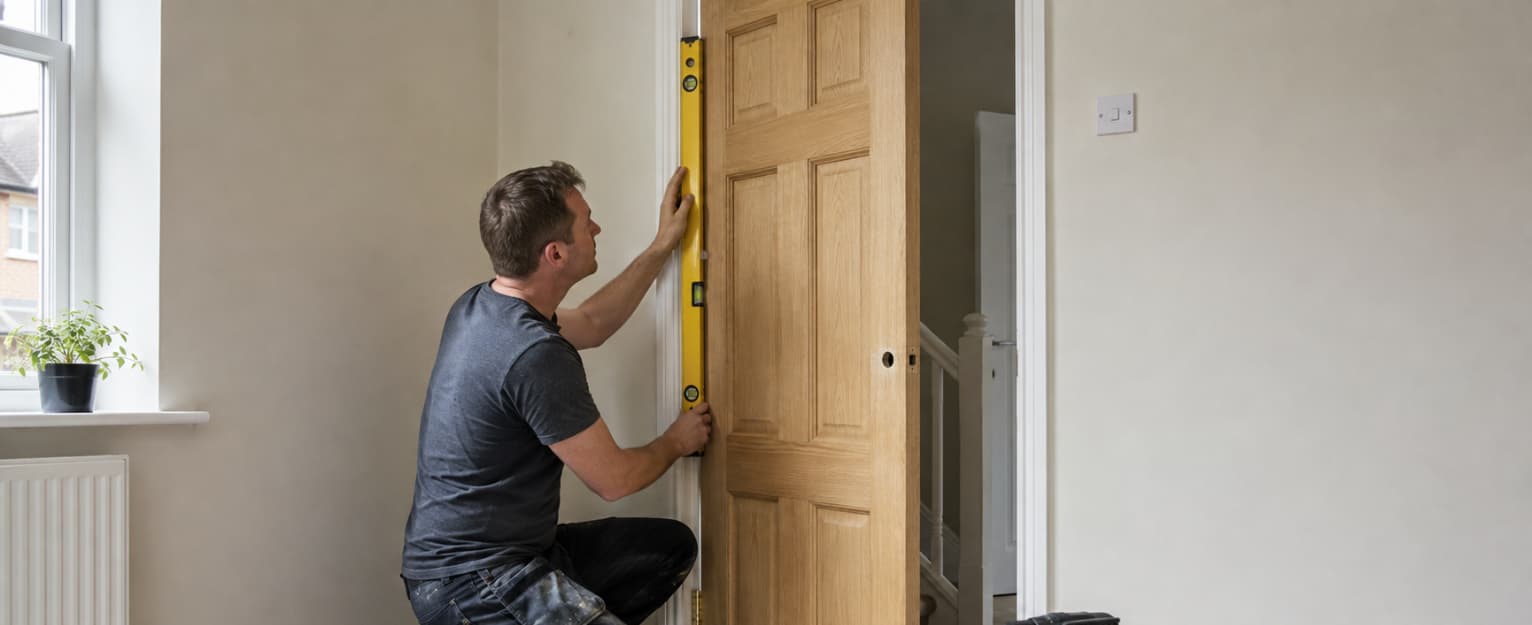
Whether you’re giving a tired hallway a refresh or updating several rooms throughout your house, a new door is a simple but effective way to give your home a fresh look and feel.
Of course, choosing the right door is only half the job – once you’ve picked your style and finish, there’s also the small matter of getting it fitted properly. Get the installation right and your new door should open, close and latch smoothly. Get a few details wrong, though, and you could soon be dealing with door installation problems like sticking edges, awkward gaps, loose handles or an internal latch not working as it should.
At Savoy Timber, we’ve been helping customers across the UK with their home improvement projects for over 70 years. As a leading UK stockist of premium internal doors, we know that getting the practical details right matters just as much as finding a design you love.
With that in mind, let’s go through some of the most common door installation mistakes to avoid, and share some tips on how to install internal doors properly.
As with many DIY projects, one of the easiest mistakes to make is rushing through the measuring stage. Your new door needs enough clearance to open and close without rubbing against the frame, and even a small error here can lead to wasted materials, extra work and a result that doesn’t fit or function as it should. That’s why it’s so important to measure the door opening and frame carefully, checking the width, height and depth in a few different places.
Once you’ve taken your measurements, it’s also worth checking the condition of the existing door frame, too. A frame that’s twisted, warped, damaged or out of square can affect how the new door sits, even when your measurements are accurate – this can lead to uneven gaps, sticking or difficulty getting the door to close and latch properly. If the frame is significantly distorted, it may need to be repaired or adjusted before the new door is fitted.
Finding out that your new door is slightly too large for the frame doesn’t necessarily mean you’ve got a problem. The mistake is assuming that more trimming is better. It can be tempting to remove a little extra to make sure the model fits, but once the material is gone, you can’t put it back, leaving you with a door that’s too small and a much harder job to put right.
Wherever possible, it’s better to choose the right size door to begin with, rather than relying on excessive trimming. However, if trimming is unavoidable, always check the manufacturer’s guidance, as some door designs and constructions may not be suitable for much adjustment without affecting their performance. At the same time, think about where you’re trimming the door, as taking too much from one edge of a panelled or decorative door can throw off the look of the design.
If the door needs more than a minor adjustment, it’s worth having this done by a professional to ensure it’s trimmed correctly and still fits and functions as it should. For a more precise fit from the very beginning, you can also choose one of our made-to-measure doors, tailored to the dimensions of your opening.
Hinges might look like a relatively minor part of the installation, but they’re doing a lot of work, supporting the weight of the door and helping it hang correctly within the frame. If they’re positioned incorrectly or don’t line up between the door and frame, the door may not hang squarely, which can leave it rubbing against the frame or becoming difficult to open and close.
Before cutting the hinge recesses, carefully mark their positions on both the door and frame, making sure they line up correctly. The hinge leaves should sit neatly within their recesses and be flush with the surrounding surface. The depth matters too: a recess that’s too deep can pull the hinge below the surface, while one that’s too shallow can leave it sitting proud. Either can alter the way the door sits against the frame and prevent it from closing cleanly.
Once the hinges are attached, test the door’s movement before fitting the remaining hardware. It should swing freely without catching or rubbing. If something isn’t quite right, identifying the cause at this stage is much easier than trying to correct it once the installation is complete.
This is one of those door installation problems you might not notice until almost everything else is finished. The latch, handle and strike plate all need to work together for the door to close and latch properly. If the latch and strike plate are out of alignment, the latch can catch against the edge of the strike plate instead of entering it cleanly – this can make the door harder to close, leave the handle feeling stiff or prevent the latch from engaging securely.
Before fixing the hardware permanently, check that the latch and strike plate are positioned at the same height and line up correctly when the door is closed. It’s also worth testing the handle and latch while the door is still open, then closing the door gently to make sure the latch engages smoothly without needing to push or pull the door into position. Catching an alignment issue at this stage is much easier than trying to correct it once the installation is complete.
Knowing how to install an internal door can make a DIY project feel much more manageable, but careful preparation is what really makes the difference, helping you avoid many of the common door installation problems that turn a straightforward upgrade into a frustrating afternoon. And if you’re still not confident about tackling the job yourself, there’s no shame in getting help from an experienced installer. Some projects are better left to someone with the right tools and experience, particularly where more complicated alterations to the frame are involved.
So, whether you’re going to have a go yourself or call in the experts, you’ll need a new door – and that’s where we come in. For over 70 years, we’ve established ourselves as internal door experts, offering decades of expertise, big-name brands like LPD and Deanta, and a huge range of styles to choose from. Ready to find your new internal door? Then don’t hesitate to explore our website, pop into one of our stores or give us a call on 0345 0268 799 today.

